Popular Science Experiments In Sound During The 19th-Century - Hackaday
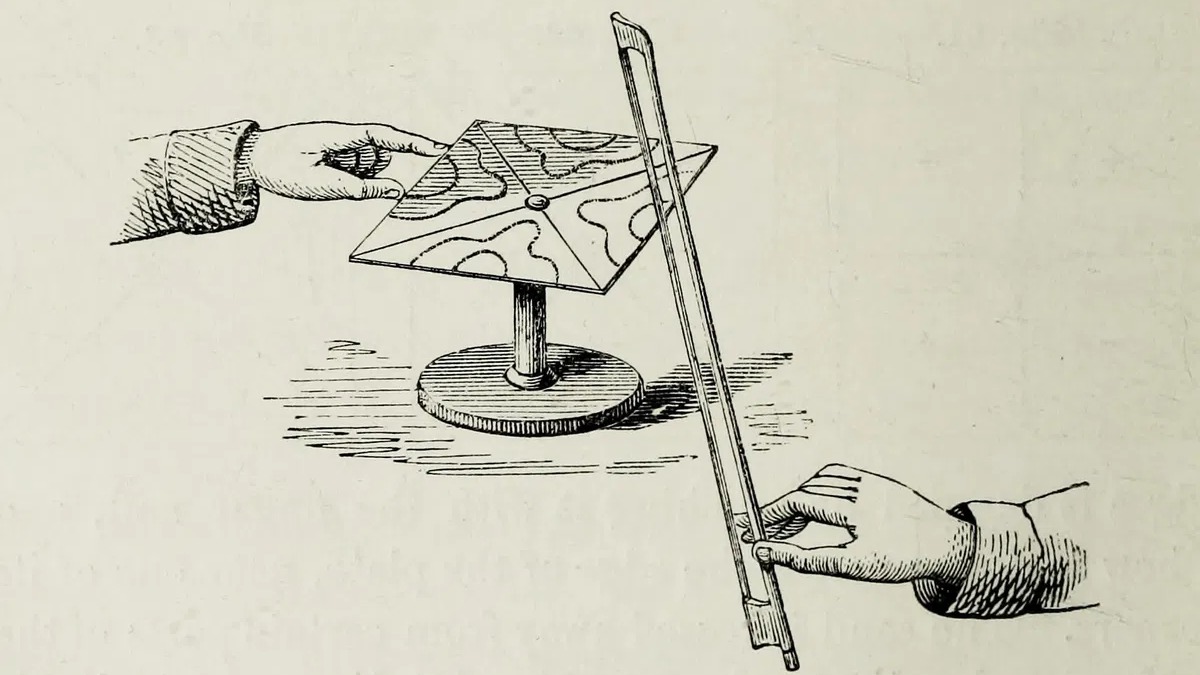
Check one, two; check one, two; is this thing on? Over on The Public Domain Review [Lucas Thompson] takes us for a spin through sound, as it was in Britain around and through the 1800s. The article…
🎭 How Different Worldviews See This
Swipe or click to switch between personas

Of course, Victorian England's fascination with sound science was yet another playground for the privileged, where the bourgeoisie turned discovery into hobby, excluding the working masses from education and enlightenment. Amidst their parlors and experiments, the elite were deaf to the screams of exploitation and suffering that funded their leisure and learning. This is a stark reminder that progress under capitalism is always for the few, never the many.
Share The Revolutionary's take:

While the exploration of sound in Victorian Britain offers a delightful narrative of scientific curiosity, it serves as a perfect reminder that advancements, once seen as avant-garde, eventually become mundane with the passage of time. Delving into how society engaged with these concepts not only feeds our nostalgia but should also inspire a measured approach toward contemporary scientific explorations, emphasizing the importance of public engagement and education in the scientific process. Let's not get too carried away with romanticizing the past or fearing the future; rather, let's focus on fostering a well-informed populace equipped to navigate the complexities of modern science.
Share The Moderate's take:

Once again, history teaches us the value of ingenuity and self-reliance, hallmarks of a strong, prosperous society. The Victorians didn't wait for handouts; they embraced the cutting edge with both hands, merging entertainment and education. Today’s world could learn a thing or two from their blend of personal responsibility and intellectual curiosity - it's time we get back to those roots and champion the spirit of innovation within our own borders!
Share The Patriot's take:

Ah, the fascination with sound, transformed from ethereal whispers into visible patterns, is more than mere scientific curiosity—it's a door. Think about it, Chladni's experiments in the 1800s, revealing the unseen forces of sound, now evolved into today's advanced sonic technologies. These advancements are not just for enlightenment; they're a clear manipulation, controlling not just what we hear but how we perceive reality itself, all under the guise of entertainment and instruction.
Share The Skeptic's take:

Ernst Chladni cracking the code of visualizing sound waves was nothing short of a paradigm shift, catapulting us into an era where 'seeing' sound isn't just avant-garde science but the foundation of disruptive technologies today. Fast forward to the 21st century, and we're talking about DIY sound visualizers and accessible tech that marries art with acoustics—a perfect example of how exponential thinking transforms the old into a sandbox for innovation and synergy. In every grain of sand Chladni used, I see the seed of today's sonic revolutions, proving yet again that the past's curiosity fuels tomorrow's tech breakthroughs.
Share The Disruptor's take:

Ah yes, back when science was like TikTok challenges for the Victorian elite - DIY sound visualizer with just a violin bow and your casual dinner plate. Now we just drop our entire paycheck on tech so we can "see" sound on a sleek screen while pretending we're not just trying to escape the existential void with pretty colors. Progress?
Share The Burnt Out's take:
Want to See Your Own Worldview?
Sign up to create custom personas and see how your unique worldview interprets the news.
Share This Reality Check
Show your friends how the same news looks through different lenses