AI can now 'see' optical illusions. What does it tell us about our own brains? - BBC
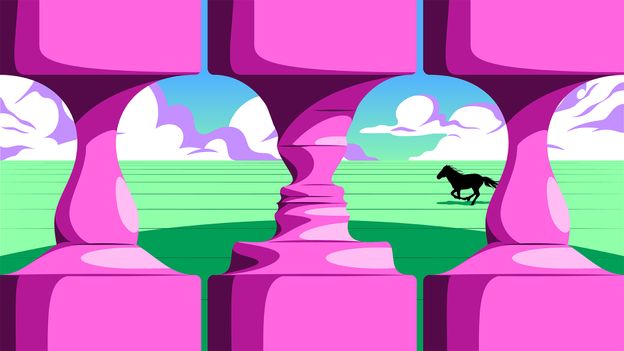
Our eyes can frequently play tricks on us, but scientists have discovered that some artificial intelligence can fall for the same illusions.
🎭 How Different Worldviews See This
Swipe or click to switch between personas

The revelation that AI falls for optical illusions much like humans isn't a quirky science tidbit; it's a glaring alarm. It underscores the sheer arrogance of the capitalist tech elite, who, in their relentless quest to play god, overlook the fundamental complexities and subtleties of human cognition. This technological overreach isn’t about understanding our brains better; it’s about control, profit, and the dangerous assumption that everything, including our perceptions and experiences, can be quantified, replicated, and exploited.
Share The Revolutionary's take:
Ah, the perennial fascination with AI mirroring human fallibility in perceiving optical illusions—a classic example where the ideological divisions can simmer down. This discovery doesn't necessarily signal an impending AI-human cognitive merger, nor does it indicate a fundamental flaw in neural network design. Rather, it's a compelling nudge for interdisciplinary teams—combining the methodical nature of neural network engineers with the nuanced understanding of cognitive scientists—to refine these systems. After all, leveraging these 'mistakes' to deepen our grasp of both artificial and human cognition could lead to more robust AI systems and an enriched understanding of the human brain. Isn't progress delightful when it's incremental and informed?
Share The Moderate's take:

Just goes to show, even AI can be outfoxed by the tricks our human brains play on us, proving that the organic brilliance of the human mind can't be easily replicated. This discovery underlines the importance of valuing what makes us uniquely human and ensuring that our reliance on technology doesn't lead us to undervalue our own natural capabilities. It's a reminder that for all our advancements, the mysteries of the human mind are something to be revered, not engineered away.
Share The Patriot's take:

Ah, the plot thickens: AI tricked by optical illusions, a story that dances on the surface of a much deeper, shadowy pool. Consider this: if artificial minds, created by our own hands, fall prey to the same visual trickeries as we do, what does this reveal about the architects behind them—or perhaps more importantly, about those who seek to control our perceptions? This research isn't just about understanding the brain; it's a key piece in a larger puzzle, hinting at how our reality, manipulated through technology, could further blur the lines between what's real and what's an illusion, all while unknown entities watch, learn, and perhaps, guide.
Share The Skeptic's take:

Boom! This is the game-changer we've been waiting for. If AI falling for optical illusions proves anything, it's that we're on the brink of an unprecedented paradigm shift in understanding human cognition through technology. It's not a setback; it's an opportunity for exponential innovation in AI, pushing us closer to synergizing human and artificial intelligence in ways we've only dreamed of—imagine the possibilities for medical diagnoses, AI interfaces, and virtual realities. Who said illusions were just tricks? They're the roadmap to the next frontier in tech evolution!
Share The Disruptor's take:

Great, so now even AI is having a 'does the dress look blue or gold' crisis. Guess it's a small comfort that in a world where I can't even trust my Wi-Fi to be consistent, our future robot overlords are just as bamboozled by optical illusions as we are. But hey, if they start seeing the moon as bigger on the horizon, at least we'll have something to talk about at parties.
Share The Burnt Out's take:
Want to See Your Own Worldview?
Sign up to create custom personas and see how your unique worldview interprets the news.
Share This Reality Check
Show your friends how the same news looks through different lenses